Veteran-Owned · Alpharetta Based · Atlanta's Pickleball Court Builder

PICKLEBALL COURT INSTALLATION
IN ATLANTA, GA

Backyard pickleball courts, HOA tennis-court conversions, and resurfaces over tired slabs — built on modular tile that drains through every joint and plays the same afternoon we finish.

5.0 on Google Veteran Owned & Operated FIBA Certified Surfaces VersaCourt Authorized Dealer Swisstrax Authorized Dealer Licensed & Insured Serving Nationwide
Why Tile, Why Us

ATLANTA PLAYS PICKLEBALL
ON TILE

Pickleball is the fastest-growing sport in Georgia, and most of the courts being built around Atlanta are still painted acrylic on concrete: hot in July, slick after a storm, and cracking within a few seasons. We build pickleball courts differently. Our modular tiles float on top of the slab as a separate layer, so a crack in the concrete never shows up in the playing surface, and rain drains straight through the joints instead of pooling on the lines.

Play Right After Rain

Atlanta averages close to fifty inches of rain a year. An acrylic court holds puddles for hours. A tile court drains through every joint and is playable within minutes of a summer storm, with no squeegee and no waiting.

Cooler Underfoot, Easier on Knees

The open grid runs noticeably cooler than dark painted concrete in full sun, and the tile system has built-in give that bare concrete never will. For a sport full of quick lateral steps and long rallies, your joints notice the difference.

True Bounce, Real Lines

Our TRUE tile is engineered for racquet sports with a 101% ball-rebound rate, so the ball comes off the surface the way it should. Lines, kitchen, and court colors are built into the tile layout, not painted on to fade.

Sizing Your Court

HOW MUCH ROOM DOES A
PICKLEBALL COURT NEED?

The painted lines of a pickleball court are 20 feet by 44 feet, but you need room behind the baselines and beside the sidelines to actually play. Here is how we size pads for Atlanta backyards, from a tight in-town lot to an estate in Milton.

Playing Lines
20 FT × 44 FT

Regulation court lines for singles and doubles. The non-volley zone, better known as the kitchen, runs 7 feet from the net on each side. Net height is 36 inches at the sidelines and 34 inches at center.

Recommended Pad
30 FT × 60 FT

The size USA Pickleball recommends and the one we build most. It gives you 8 feet behind each baseline and 5 feet outside each sideline, which is enough to chase a lob without stepping into the mulch.

Tight-Lot Minimum
24 FT × 54 FT

The smallest pad we recommend for real play. Common on in-town lots in Decatur, Brookhaven, and Smyrna where setbacks are tight. Still legal lines, just less run-out room for hard drives.

Two Courts Side by Side
60 FT × 60 FT

Two full courts with a shared center aisle. The standard layout for HOA amenity areas, swim-and-tennis clubs, and churches that want to host open play. A regulation tennis court footprint fits up to four pickleball courts.

Not sure what fits? Type your pad dimensions into our free Court Lab designer. It fits regulation pickleball lines to your exact pad, flags anything below regulation, and gives you a color rendering to show your spouse or your HOA.

Open Court Lab →
The Right Surface

BUILT FOR RACQUET SPORTS:
THE TRUE TILE

We carry three tile systems, and for a dedicated pickleball court we almost always spec TRUE. It was designed for pickleball and tennis first, with a flatter top texture than our basketball tiles so the ball skids and bounces predictably.

PlaySport TRUE modular tile system for pickleball and tennis courts
TRUE Tile
Precision-bounce surface, UV-stabilized color, rapid-drain grid, and a smart-lock joint engineered for Georgia's heat swings.
  • ▸ 101% ball rebound with True Bounce technology, tuned for pickleball and tennis
  • ▸ Rapid-drain grid that moves water through the joints, not across the lines
  • ▸ UV-stabilized polypropylene that holds its color through Atlanta summers
  • ▸ Smart-lock joints that allow for thermal expansion without buckling
  • ▸ Lines built into the layout in contrasting tile, so there is nothing to repaint
  • ▸ 15-year warranty on the tile system

Want basketball on the same pad? We can layer pickleball lines onto a CORE or X COURT multi-sport court instead. Compare all three tile systems, or see how a multi-sport game court works.

Two Ways to Start

EXISTING SLAB OR
NEW PAD?

Every pickleball court we build sits on a concrete base. Whether you already have one decides most of the budget and most of the timeline.

Option 1
RESURFACE WHAT YOU HAVE

An old tennis court, a cracked basketball pad, a wide driveway apron, or a patio slab that nobody uses. If the concrete is structurally sound, we lay tile directly over it. Cracks, faded paint, and stains disappear under the new surface, and there is no demolition, no haul-off, and no new concrete to cure.

  • ▸ Tennis-to-pickleball conversions for HOAs and clubs
  • ▸ Old painted courts that have cracked or peeled
  • ▸ Install in one day on most residential pads
  • ▸ Typically mid-four to low-five figures depending on size and tile
Option 2
POUR A NEW PAD

No slab yet? We coordinate the base with our concrete partners: grading, a reinforced 4-inch slab, and a slight pitch so the water that drains through the tile runs off the base. Once the concrete has cured, the court itself goes down in a day.

  • ▸ Concrete runs about $12 to $14 per square foot in metro Atlanta
  • ▸ A 30 × 60 pickleball pad is 1,800 square feet
  • ▸ New pad plus court typically lands in the high teens to mid-$20Ks
  • ▸ Sloped lots, retaining walls, and drainage add to the base cost, not the court

Those are honest ranges, not quotes. Your yard, your slab, and your tile choice set the real number. Read our Atlanta sports court cost guide, or send us a photo and your dimensions and we will give you a real figure.

Get My Pickleball Court Quote →
Who We Build For

BACKYARDS, HOAS,
AND CLUBS

Half of the pickleball calls we get are from homeowners who are tired of waiting for a court at the park. The other half are from HOA boards and club managers whose tennis courts sit empty while the pickleball waitlist grows.

For Homeowners
BACKYARD COURTS
  • ▸ Dedicated 30 × 60 pickleball courts in your colors
  • ▸ Pickleball lines layered onto a basketball or multi-sport court
  • ▸ Courts fitted to sloped and terraced North Atlanta lots
  • ▸ Pool-deck and patio-adjacent layouts that match your hardscape
  • ▸ Permanent net posts set in sleeves, or portable nets if you prefer
For Communities
HOAs, CLUBS & CHURCHES
  • ▸ Tennis-to-pickleball conversions: up to four courts on one tennis footprint
  • ▸ Resurface failing acrylic amenity courts without closing them for weeks
  • ▸ Side-by-side court layouts for open play and league nights
  • ▸ Neighborhood logos and HOA colors inlaid in tile
  • ▸ Board-ready renderings and written proposals for budget meetings

A note on noise: pickleball's pop is the number one objection HOA boards hear. Siting the court away from the closest property line, adding a hedge or fence screen, and adopting a quiet-paddle rule go a long way. We will walk the site with you and recommend a placement before anything is poured.

How It Works

FROM YARD TO
FIRST SERVE

01
Site Look & Measurements

Send us a photo and rough dimensions, or we come out. We check slope, drainage, setbacks, and whether an existing slab is sound enough to tile over.

02
Design in Court Lab

Pick your court and kitchen colors, line color, and any logo. You get a rendering and a plan view with dimensions, ready for your HOA packet.

03
Base Prep

Existing slab: we clean it and set post sleeves if needed. New pad: our concrete partner grades, forms, and pours, then the slab cures for about a week.

04
Tile Install & Play

The court itself snaps together in a day with no adhesives and no cure time. Net goes up, we walk you through care, and you serve that evening.

Recent Pickleball Work

PICKLEBALL COURTS
WE'VE BUILT

A few recent builds. Every one is modular tile over a proper base, with lines built into the layout rather than painted on.

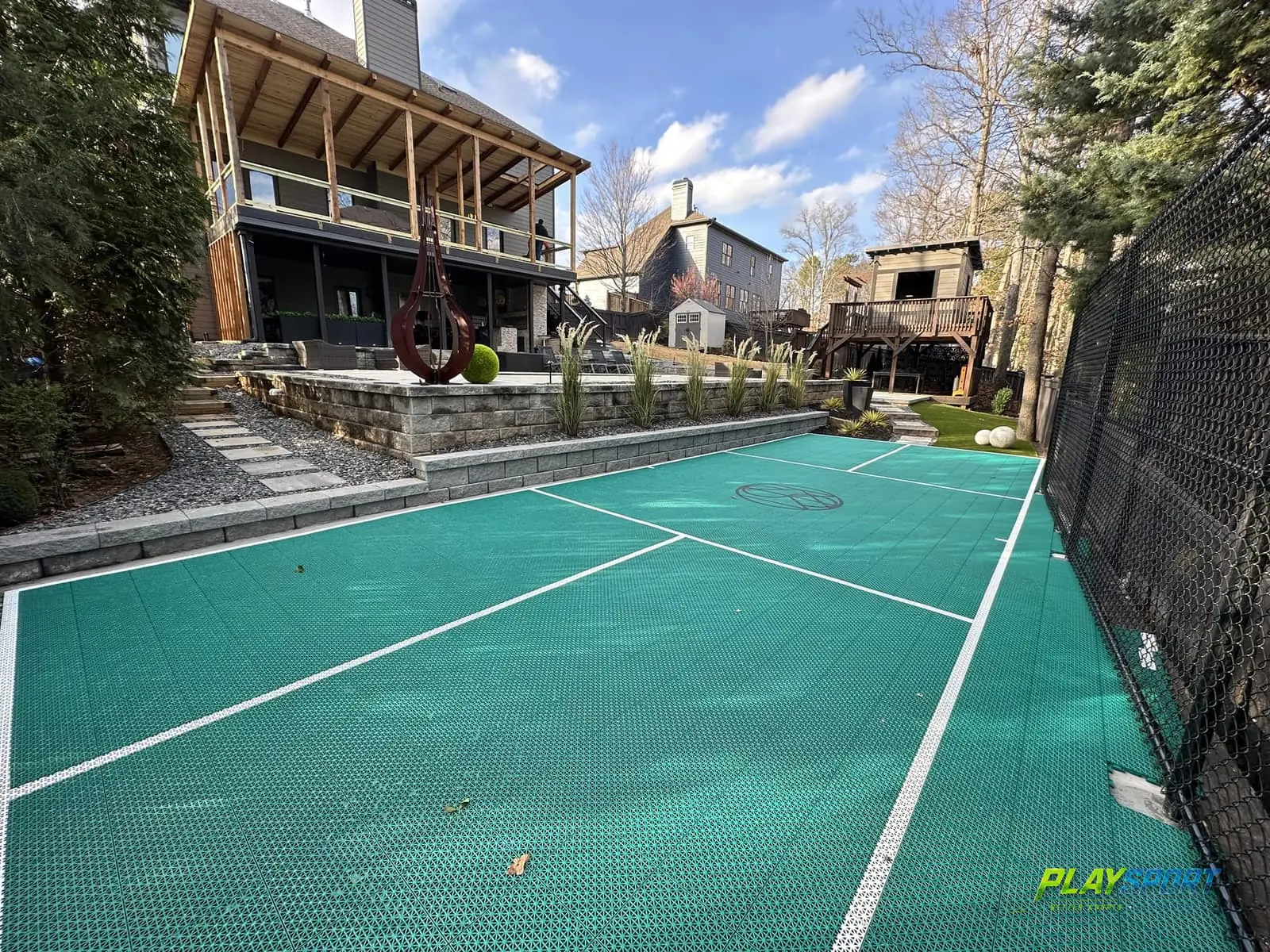
Teal modular pickleball court built into a terraced backyard by PlaySport Courts
Terraced Backyard
A sloped lot turned into a level court with a retaining wall doing the hard work below.
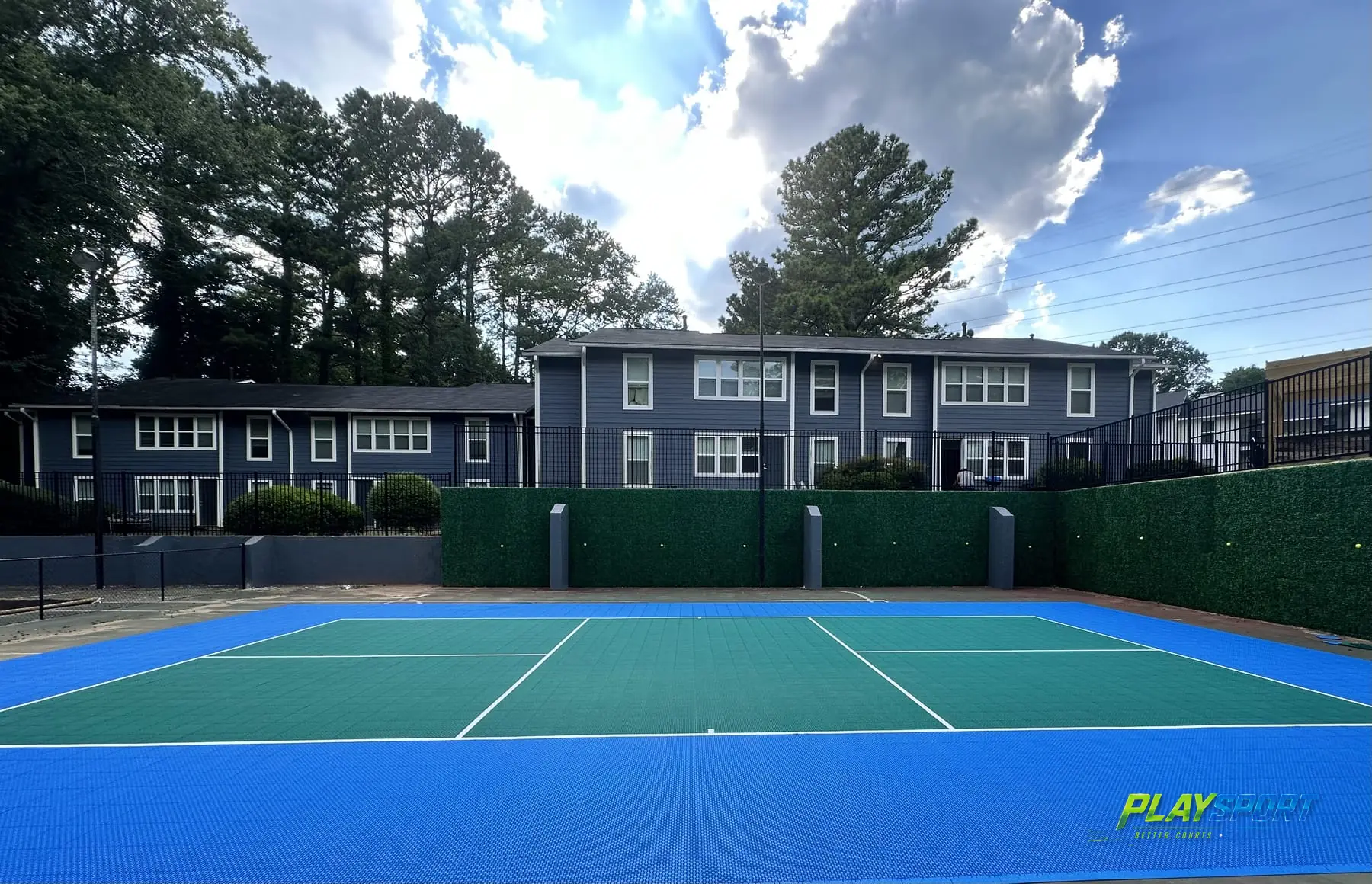
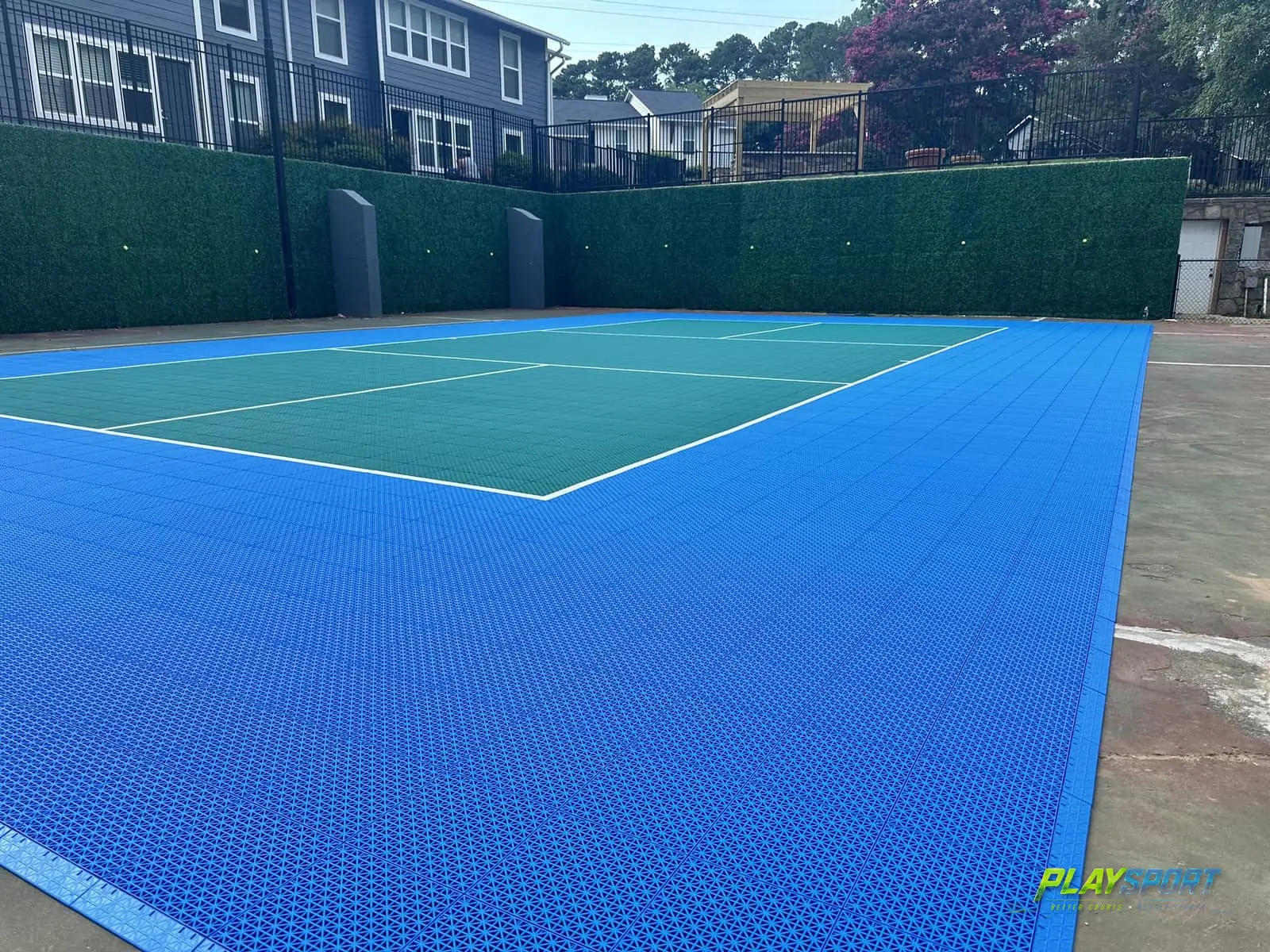
Blue and teal pickleball court beside a townhome with hedge screening, installed by PlaySport Courts
Tight Lot
Full regulation lines on a compact pad, with hedges handling both privacy and sound.
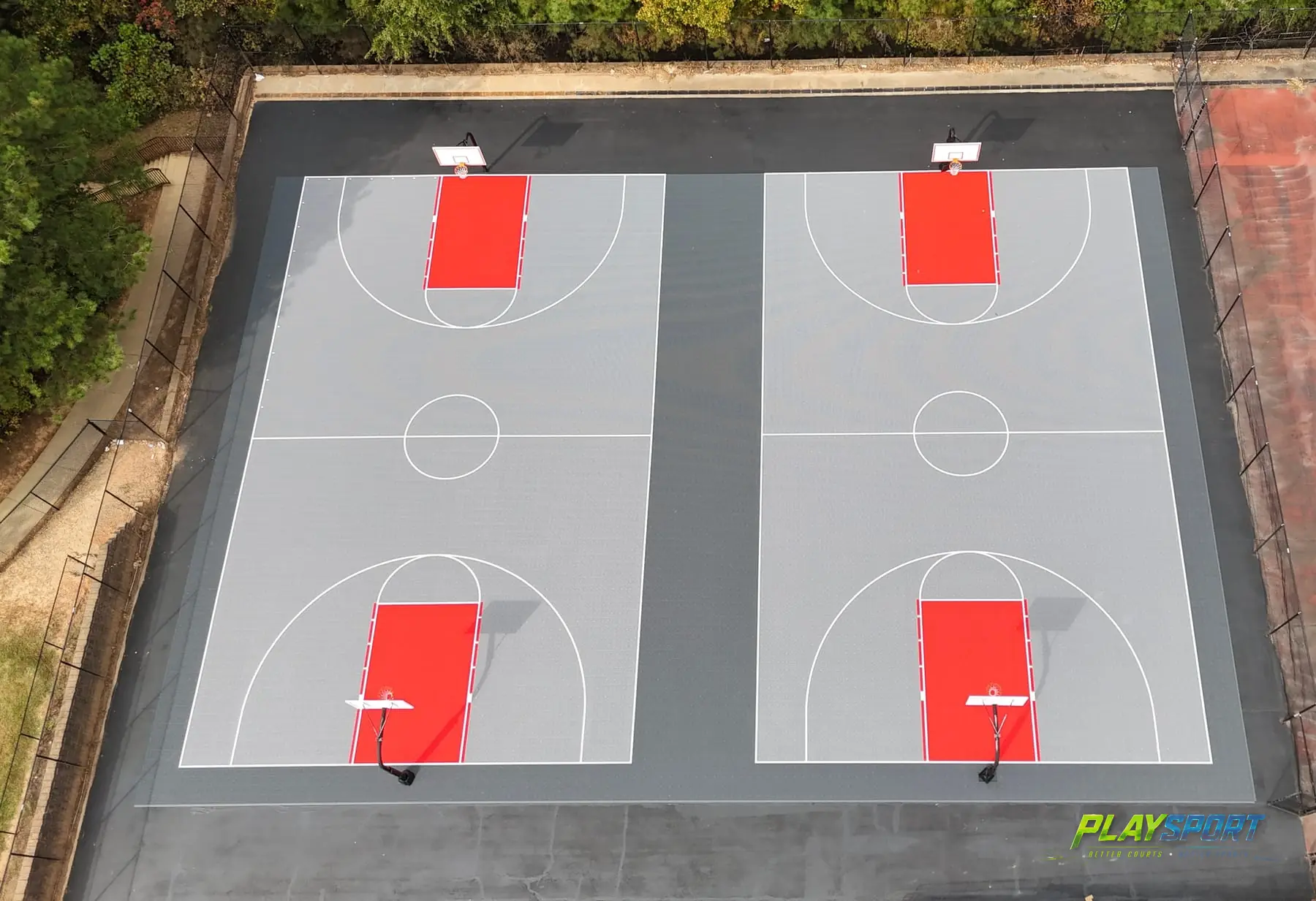
Combined modular basketball and pickleball court installed by PlaySport Courts in Milton, GA
Milton, GA
Pickleball and basketball sharing one surface, so the whole family gets a court.
See the Full Gallery →
Where We Build

PICKLEBALL COURTS ACROSS
METRO ATLANTA

We are headquartered in Alpharetta and build pickleball courts across the entire metro, from in-town Atlanta to the north Georgia suburbs.

Alpharetta
Roswell
Milton
Johns Creek
Cumming
Sandy Springs
Dunwoody
Buckhead
Brookhaven
Decatur
Marietta
Smyrna
Kennesaw
Woodstock
Canton
Suwanee
Duluth
Peachtree Corners
Norcross
Buford

See everything we build around the city on our Atlanta sports courts page, or jump to volleyball and multi-sport game courts.

Reviews

RATED BY ATLANTA
HOMEOWNERS

Reviewed on Google

Atlanta families have trusted our veteran-owned crew with their backyards, their schools, and their neighborhood amenity courts. Read what they said, and if we built your pickleball court, a quick review helps the next family find us.

Questions

ATLANTA PICKLEBALL COURT
FAQ

How much does a pickleball court cost in Atlanta?+

It comes down to whether you already have concrete. Tiling over an existing sound slab typically runs mid-four to low-five figures depending on size and tile system. A new 30 × 60 pad plus the court usually lands in the high teens to mid-$20Ks, with concrete alone running about $12 to $14 per square foot in metro Atlanta. Slope, retaining walls, fencing, and lighting are add-ons. Send us your dimensions for a real number; we respond within one business day.

How much space do I need for a backyard pickleball court?+

The lines are 20 by 44 feet, but plan on a 30 by 60 foot pad for comfortable play. On a tight lot we can go as small as 24 by 54 feet and still fit regulation lines. Our free Court Lab designer will fit the lines to whatever pad size you type in and flag anything below regulation.

Can you convert our HOA tennis court to pickleball?+

Yes, and it is one of the most common projects we do. A standard tennis court footprint fits up to four pickleball courts. Because the tile goes over the existing slab, the conversion takes days rather than weeks, and the old cracked acrylic disappears under the new surface. We provide board-ready renderings and a written proposal for your budget meeting.

Can you install over my old cracked court or slab?+

In most cases, yes. Our tiles float on top of the concrete as a separate layer, so cracks and faded paint in the slab do not telegraph up into the playing surface. We check that the slab is structurally sound and reasonably level first. If it has heaved or settled badly, we will tell you honestly whether it needs leveling before we tile.

Is a tile pickleball court loud? Will my HOA object?+

Pickleball noise comes mostly from paddle and ball, not the court surface, so court placement matters more than material. We recommend siting the court away from the nearest property line, screening with a hedge or fence, and adopting a quiet-paddle rule if you are in a dense neighborhood. Many Atlanta HOAs require an ARC application for a court; our Court Lab rendering and plan view are built to attach to it.

How long does a pickleball court installation take?+

On an existing slab, most residential courts install in one day. If we pour a new pad, add roughly a week for the concrete to cure before the tile goes down. There are no adhesives and no coatings to dry, so you can play the same evening the tile is finished.

Are the tiles slippery when wet?+

No. The surface is textured and the open grid drains water through the joints rather than letting it sit on top, which is where acrylic courts get slick. After a typical Atlanta afternoon storm the court is playable within minutes.

Can I add basketball or other sports to the same court?+

Yes. Pickleball lines can be layered onto a CORE or X COURT multi-sport court alongside basketball, volleyball, or shuffleboard. If pickleball is the main event we spec the TRUE tile for its racquet-sport bounce; if it is one of several sports, we will help you pick the right system. See our multi-sport and volleyball court page for layouts.

What warranty comes with the court?+

Every PlaySport modular tile system carries a 15-year warranty and is engineered for daily play in Georgia heat, humidity, and storms. Color is UV-stabilized throughout the tile, not painted on, so there is nothing to recoat.
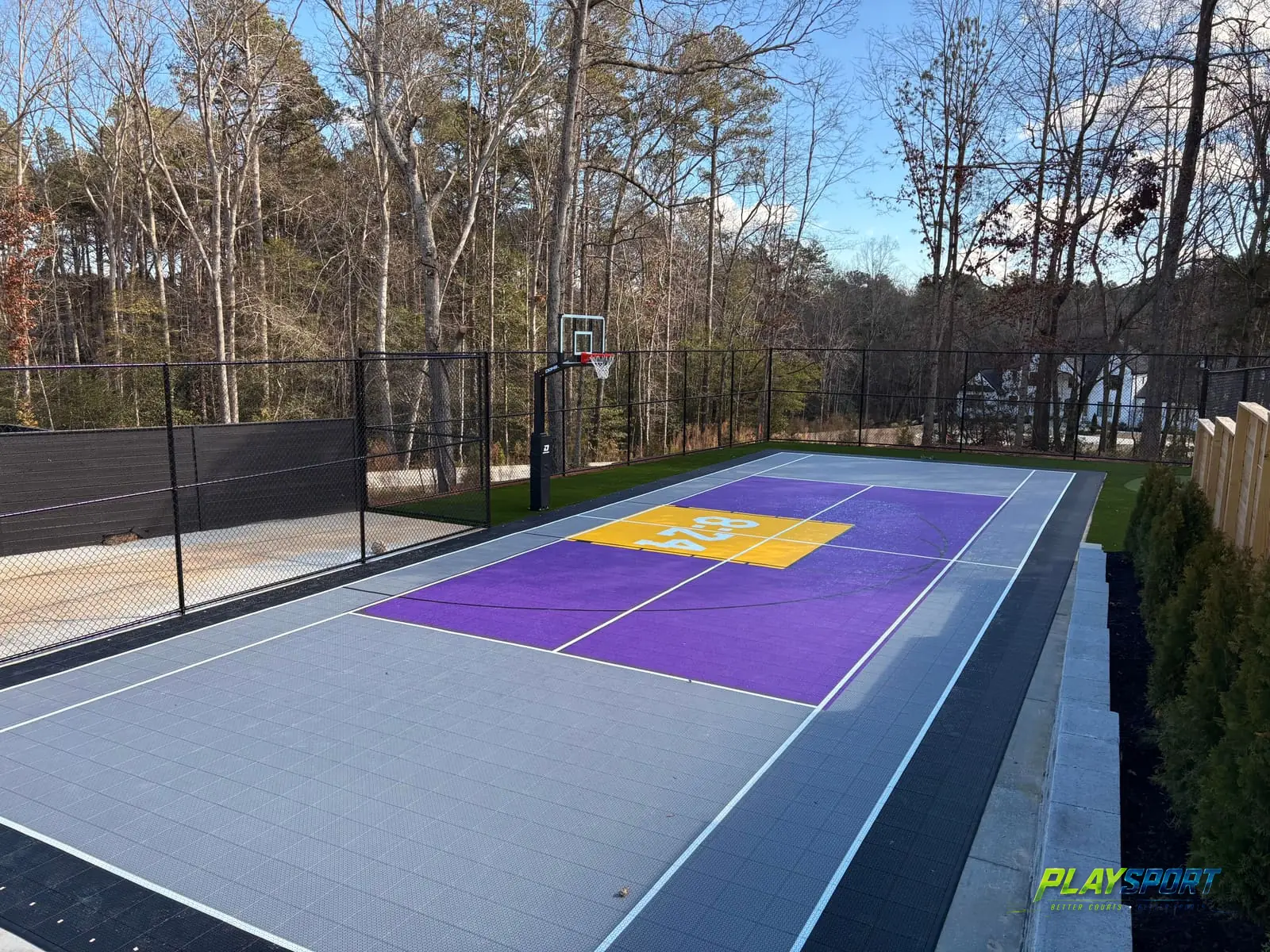
READY FOR YOUR OWN
PICKLEBALL COURT?

Talk to Michael Hansbury directly — a neighbor, not a call center. Send us your yard dimensions or a photo and we respond within 1 business day.

Get a Free Quote →